



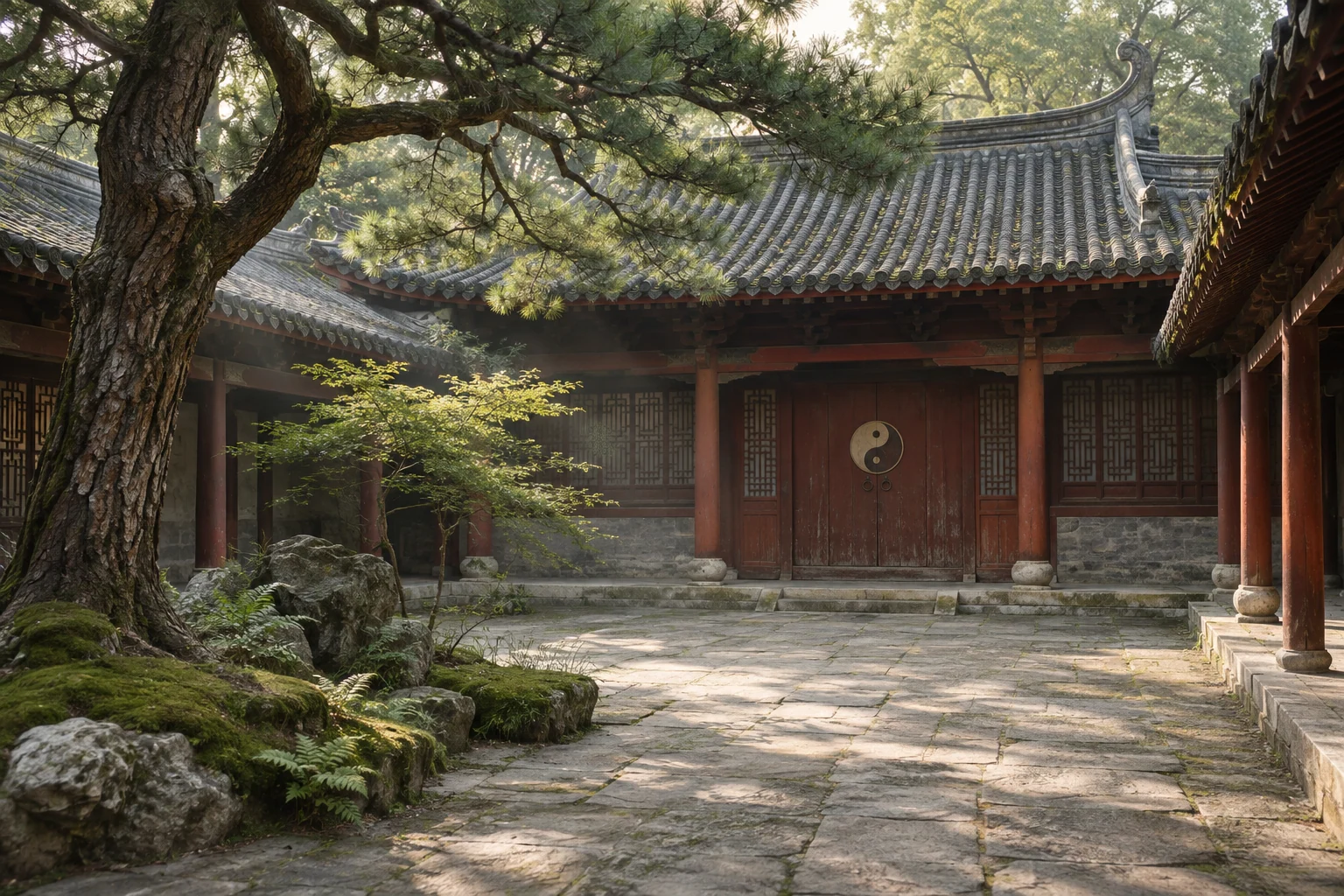
A small light.
A long journey.
A mountain. A keeper. A promise made in time.
The tale carried by eighteen beads.
A YUNQINGZI brand tale · English / 中文
The light in the snow
In her thirty-sixth year, she went alone to Mount Kailash.
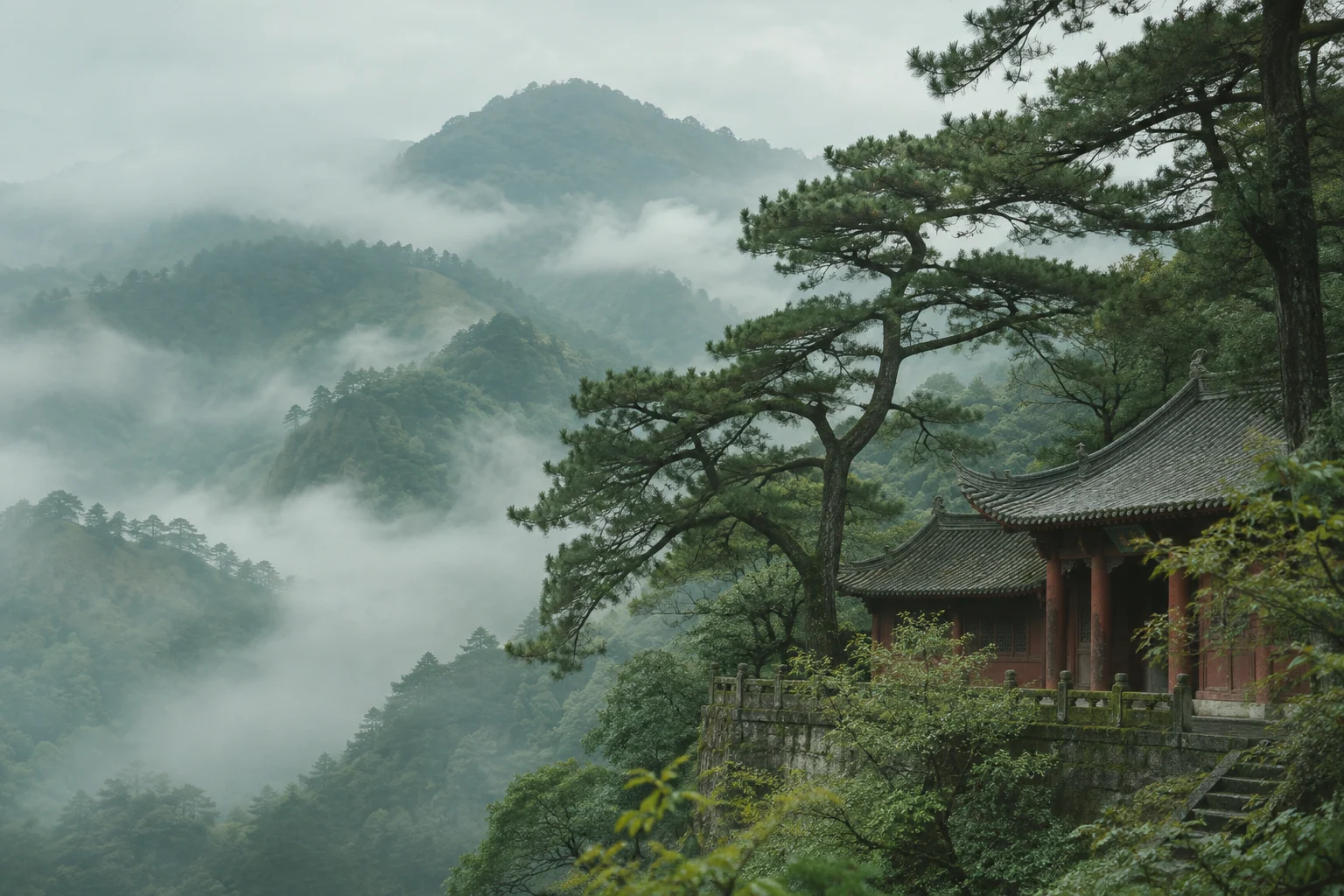
The sacred mountain of Ngari in Tibet, the main peak of the Gangdise range. Year after year, pilgrims walk around it — a circuit of more than fifty kilometres, crossing the Dolma La pass at five thousand six hundred metres.
She was halfway round, past Drirapuk Monastery, when the weather turned. Wind drove the snow into a wall. Her companions turned back, saying that going further would kill them. She did not turn back.
In the worst of the storm, behind the monastery, a small light burned beneath the cliff.
A stone house, half fallen, its roof open to the sky. Inside, a single butter lamp burning with no one to feed it. Beneath the lamp sat an old woman wrapped in worn wool, turning a thread in her hands.
She bowed and gave her Daoist name. The woman did not look up. She only pushed a strand of beads into her lap. Cold, and heavy — like a small piece of frozen river.
The moment her fingers closed around it, the mountain went still. The wind stopped mid-gust. Snow hung in the air and did not fall. The flame did not move, and yet burned twice as bright. And inside the beads there was sound — low, the low of many voices reciting together, travelling from her palm to her heart.
Only then did the old woman look up. Her face could not be seen in the lamplight. She said one sentence in Tibetan. Years later, she translated it:
“This is not mine. Three hundred years ago someone left it here, waiting for a hand that could hold it.”
By morning the snow had stopped. The house had fallen in — all but half a wall, and the lamp. The woman was gone. In the snow there were no footprints, none coming in, none going out.
Back at Qingcheng, the beads were warm every night. Snow fell on them and did not melt. She counted them: eighteen main beads — nine carved bone, three pressed from incense ash, six of agate and turquoise, each held apart by a small brass spacer. Eighteen, however she counted.
She Went Up Kailash a Second Time
She had thought they were only beautiful.
Then came the years of watching people: those who could not sleep, those who swallowed their words, those who had been alone too long. And she understood — a strand like this should not stay in one pair of hands.
So she climbed Kailash a second time. Not for teaching this time. For how such a strand is made.
The old woman shook her head. “What will you do with it?”
“Give it to people to wear.”
“Making one costs a life. What will you give?”
She thought for a while. “I will give time.”
The old woman pointed at the door. “Then sit there until that patch of snow melts.”
Above the snow line, snow does not melt.
She sat down in the snow outside the stone house. She sat at sunrise, copied scripture at sunset, drank one bowl of snow water a day, and never asked why. The wind piled snow to her knees. She did not rise. The snow reached her shoulders. She did not rise.
On the ninetieth day, a circle without snow opened around her.
The old woman lifted the curtain. “Come in.”
She went in. The old woman looked at her for a long while, then said three things:
“What I have here, I give to three kinds of people: hands that do not shake, a heart that does not covet, and one who can sit still.”
“You did not come for the teaching. You came to ask for energy on other people’s behalf.”
“You are all three. I will teach you.”
The Three Materials She Learned
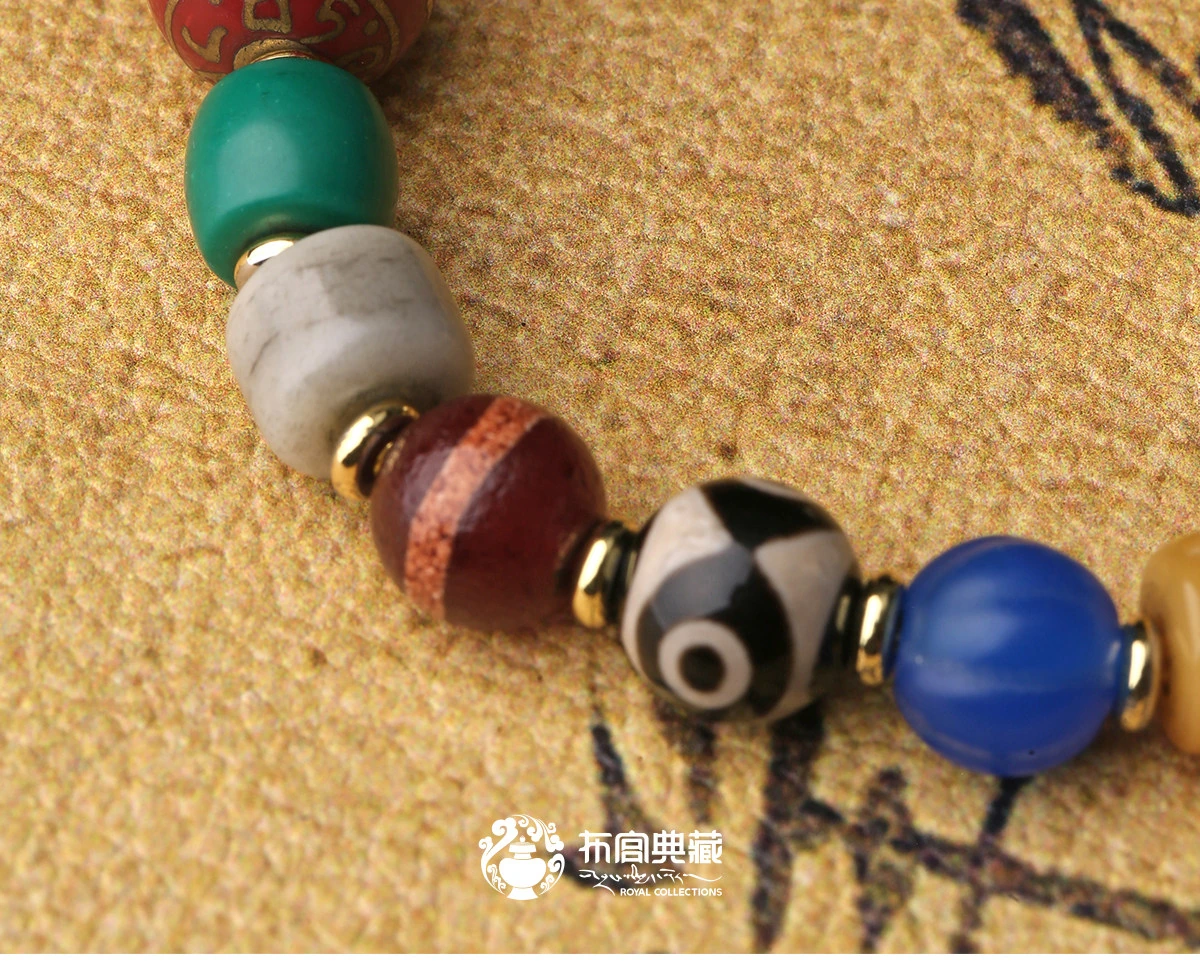
Bone. Only from yaks that died naturally above the snow line. Not one killed. The bone must be whitened by wind and buried under snow for a full winter before a single section is taken. For eighteen beads, six sets a year cannot be gathered.
Ash. Wick ash from spent butter lamps, mixed with old incense ash from the censers, a touch of cinnabar, pressed into beads by hand. Three thousand presses for one bead. The fingertips split.
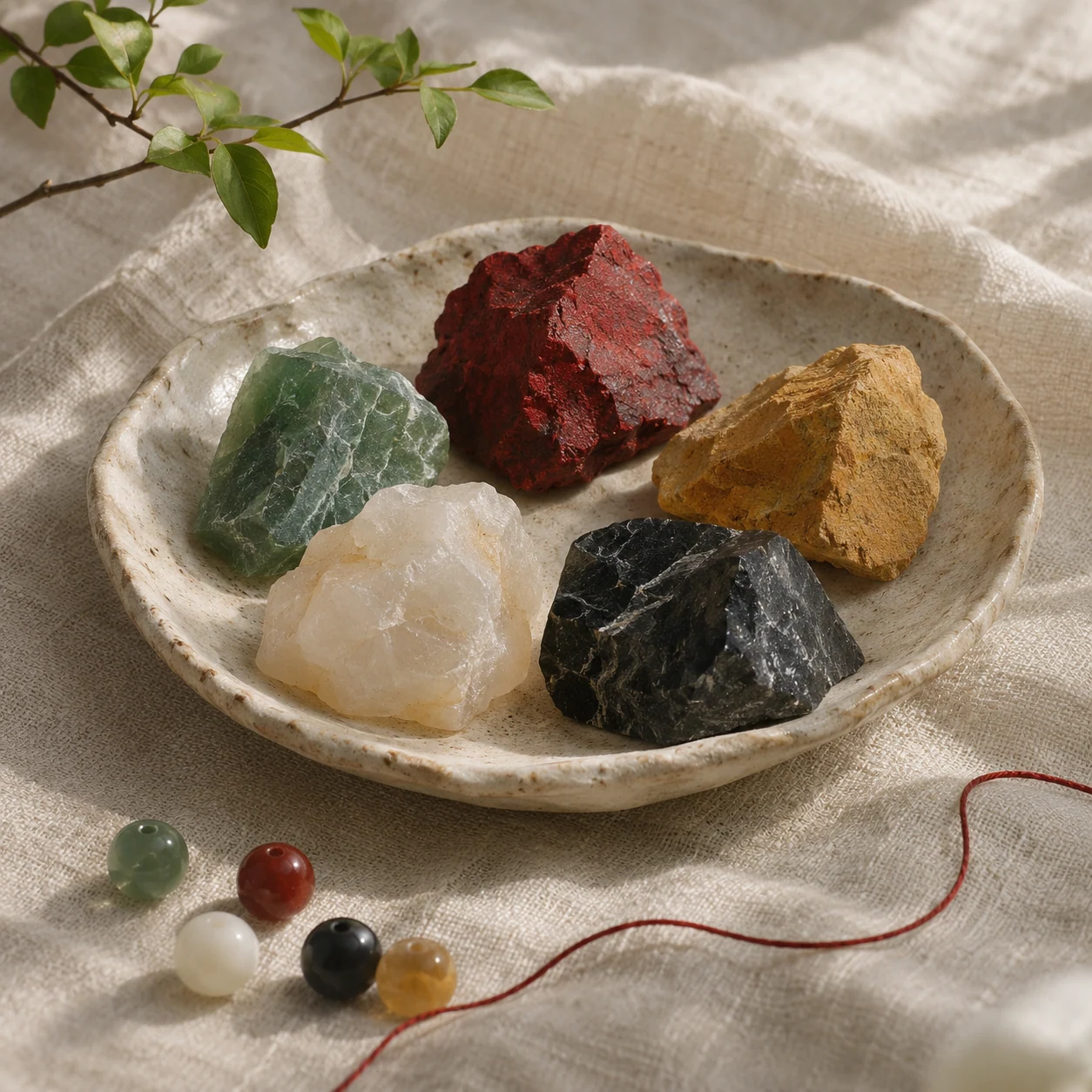
Stone. Turquoise and agate only from old stock left by earlier generations. No new mine is ever taken. An old trader will spare perhaps a dozen pieces a year.
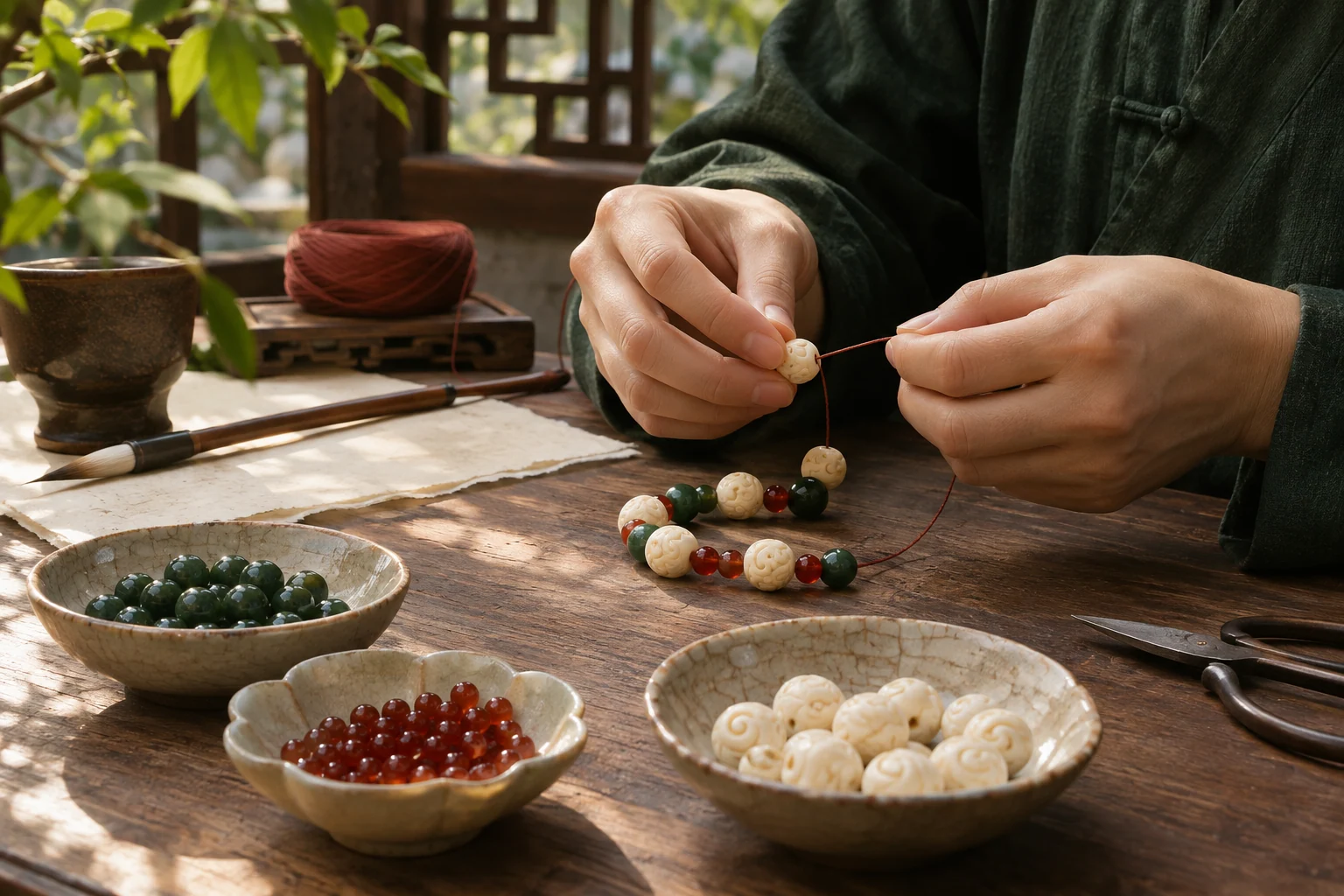
No machine touches the strand. Drilling, rounding, spacing, threading — all by hand. Before a bead joins a strand, it is counted aloud under the lamp.
One strand takes forty-nine days.
Finished, and Not for Sale
When a strand is finished it does not go into a box, and it does not travel.
The Keeper carries it up the mountain and enshrines it in an old temple in Tibet, beneath the butter lamp in the corner of the hall, offered together with the flame. One strand, one place. It is never moved.
She said: the longer the beads stay on the mountain, the heavier their qi. People below are in a hurry. Beads on the mountain are not allowed to be.
The Day It Is Sold
Someone orders. Only then does the Keeper receive the name, and only then does he climb to the temple.
There is a rule for taking it down: first he speaks before the lamp and says for whom it is taken. One strand from one lamp. No choosing. No exchanging.
The strand is wrapped in old cloth, carried by land, over the pass, and delivered to Qingcheng.
Before the Blessing, She Calculates
When the strand reaches her hand, she does not begin at once. She calculates first.
The Qingwei lineage keeps one old method: the Name-Land Covenant.
First, the sound. The sound of the name is split into the five tones — gong, shang, jue, zhi, yu — and each tone returns to one element.
Second, the strokes. The strokes of the name fall into the nine palaces of the Luo Shu, giving one base number.
Third, the land. The buyer’s region is converted into one of the five directions and a solar term hour. Different places, different directions from which the qi arrives.
Fourth, the covenant. Sound, strokes and land are pushed together to yield a number belonging to that person alone — the covenant number.
Fifth, the rite. Only then is it decided how to bless: how many recitations, from which side the cinnabar line begins, at which hour the talisman is drawn, toward which direction the lamp is fed.
One step wrong, and the whole rite begins again. So every strand is calculated for a long time before she begins.
Only after that does she touch it.
Clean hands. Spring water. A single cinnabar line on yellow paper — no name written on the talisman, because the name has already become a number. Recitation of the Qingjing Jing, again and again, as many times as the covenant number. Then the strand is laid before the lamp that has never gone out, once at sunrise, once at moonrise, and left there until it grows still on its own.
When it has grown still, it goes down the mountain, through customs, by international courier, into the hand of the one who ordered it.
Why It Is Meant to Be Worn Only by You
This strand was calculated from one name and one patch of ground. The covenant number belongs to one person.
Change the wrist, and the number no longer matches; and when the number does not match, the qi scatters.
So her instruction: wear it yourself. Do not give it away, do not resell it, do not wear it for another.
She does not give power. She takes a breath that never scattered three hundred years ago, and arranges it again — around one name.
One person, one covenant. We do not seek to defy heaven. We seek to move in time with it.
Note: A cultural Daoist blessing ornament, symbolic of peace and harmony. No outcomes are guaranteed. Not a substitute for medical, legal or financial advice.
雪中的一盏灯
三十余岁那年,她一个人去了冈仁波齐。
那是西藏阿里的神山,冈底斯山的主峰。一年一年,有人绕着它走,一圈五十多公里,最高要翻过海拔五千六百米的卓玛拉山口。
她走到转山道中段,止热寺之后,天变了。风把雪吹成一面墙。同行的人折返,说再往前是要死人的。她没有回头。
雪最大的时候,止热寺背后的山壁底下,有一点灯。
一座塌了半边的石屋,屋顶漏着天光,屋里一盏酥油灯自己亮着,没有人在添油。灯下坐着一位裹旧氆氇的老妇人,手里转着一根线。
她行礼,报了道号。老妇人没抬头,只把一串珠子推到她膝上。珠子是冷的,压手,像一小块结了冰的河。
她握住它的那一瞬,山静了。风停在半空,雪悬着不落,灯焰不动,却亮了一倍。珠子里有声音——很低,很多人一起诵经的那种低,从掌心一直走到心口。
老妇人这才抬头,脸在灯影里看不清,只说了一句藏语。很多年以后她才译出来——
“这不是我做的。三百年前有人把它留在这里,等一个握得住它的人。”
天亮雪停。石屋塌尽,只剩半面墙和那盏灯。老妇人不在,雪上没有一行脚印。
回青城山,珠子夜夜发暖,雪落在珠面上不化。她数过:十八颗主珠——骨雕九颗、香灰压的三颗、玛瑙与绿松六颗,中间用铜的小隔珠一颗一颗隔开。怎么数,都是十八颗。
她第二次上冈仁波齐
她原以为,这只是一串好看的珠子。
后来她见过太多人:夜里睡不着的、话咽回去的、一个人过了很多年的。她才明白,这么一串珠子,不该只留在她一个人手上。
于是她第二次上冈仁波齐。这一次不求法,求的是这串珠子怎么做。
老妇人摇头:“你拿它做什么?”
“给人戴。”
“做它,是要拿命换的。你拿什么换?”
她想了一会儿,说:“我拿时间来换。”
老妇人指向门外:“那就坐。坐到哪一天,这一片雪化了为止。”
雪线之上,雪不化。
她在石屋外的雪地里坐下。日升打坐,日落抄经,一日只饮一碗雪水,不问一句为什么。风把雪堆到她的膝上,她不起;雪埋到她的肩,她也不起。
第九十天,她身边化出一个没有雪的圆。
老妇人掀开帘子:“进来。”
她进屋,老妇人看了她很久,说了三句话:
“我这里的东西,只交给三种人:手不抖的、心不贪的、坐得住的。”
“你不是来求法的。你是来替人求能量的。”
“这三样,你都有了。我教你。”
她学到的三样料
骨。只取雪线之上自然老去的牦牛骨,一头也不杀。要等它被风吹白、被雪埋过一个整冬,才取一段。做十八颗珠,一年凑不齐六副。
灰。酥油灯燃尽的灯芯灰,掺老香炉里的香灰,加一点朱砂,用手压成珠。一颗珠要按三千下,指腹会磨破。
石。绿松与玛瑙,只用老一辈留下的旧料,新矿一概不取。老商人一年只肯匀出十几颗。
串珠不用机器。穿孔、磨圆、配隔珠、系绳,全在手上过。一颗珠子成串之前,要在灯前诵经计数。
一串,四十九天。
珠子做好,不卖
成串之后,不进箱,也不上路。
守料的人背着它上山,供奉在西藏山中的老庙里,压在殿角那盏酥油灯下,与灯同供。一串只供一处,不许挪。
她说:珠子在山上待得越久,气越沉。人在山下急,珠子在山上不能急。
卖出去的那一天
有人在站上下单,守料的人收到名字,才上山取珠。
取珠有规矩:先向灯禀告,说清为谁取;一盏灯下只取一串,不许挑,不许换。
取下的那一串,用旧布裹好,走陆路,翻山口,送到青城山。
珠到她手上,先不算开光
她收到珠子,不急着动手。她先算。
清微一脉有一门老法,叫名地契数。
一取音:姓名的读音,拆成宫、商、角、徵、羽,五音各归一行。
二取画:姓名的笔画,落进洛书九宫,得一个基数。
三取地:下单人所在的地区,换算成五方与节气时辰——地方不同,气来的方向就不同。
四定契:音、画、地三样合推,得一个只属于这个人的数,叫契数。
五落仪:契数定了,才决定这一场怎么祈——诵经多少遍、朱砂线从哪边起、符在哪个时辰点、灯朝哪个方位添。
一步错,整场重来。所以每一串,她要先算很久。
算完了,才动手。
净手。灵泉。朱砂在黄纸上起一线,符上不写名字——名字已经化成了数。诵《清静经》,一遍一遍,遍数就是契数。然后把珠供在案上那盏从没熄过的灯前,日升一遍,月升一遍,等它自己静下来。
等它静下来,才出山,过关,国际物流,到下单的人手上。
为什么只建议自己戴
这一串,是照着一个名字、一方水土算出来的。契数只对一个人。
换了手腕,数就不对了;数不对,气就散。
所以她交代:自己戴。不送人,不转卖,不代戴。
她不给神通。她只是把三百年前没散的那口气,按一个人的名字,重新理了一遍。
一人一契,不求逆天,只求顺时。
注:本品为道教文化祈福饰品,象征平安与和合;不承诺现实效果,不替代医疗、法律或财务建议。
A brand tale inspired by Himalayan pilgrimage and Daoist traditions. Its supernatural elements belong to the story. The bracelet is a cultural ornament, symbolic of peace and harmony.
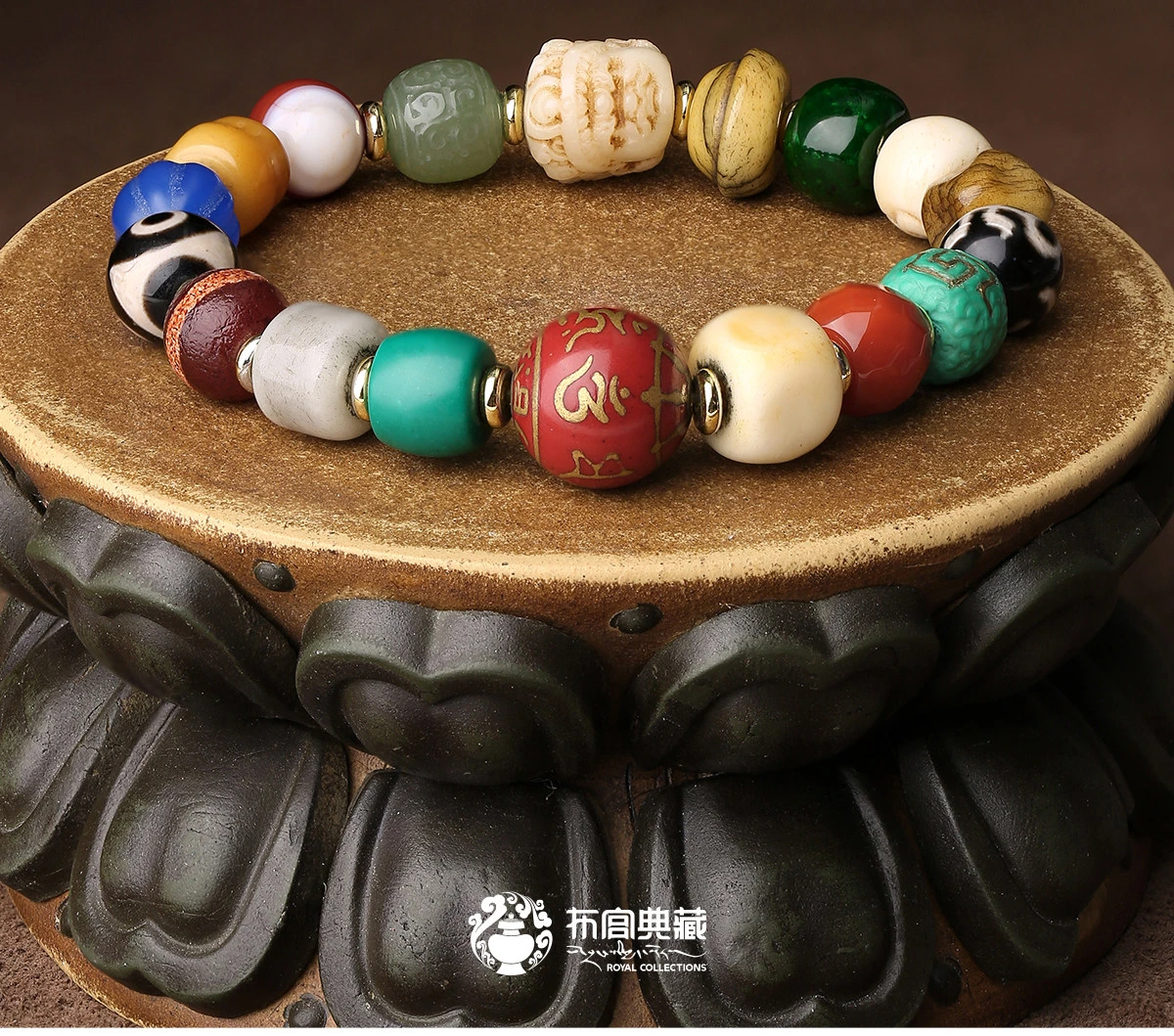
Mystic Stone Strand
Eighteen beads. A personal wish for harmony.